Introduction
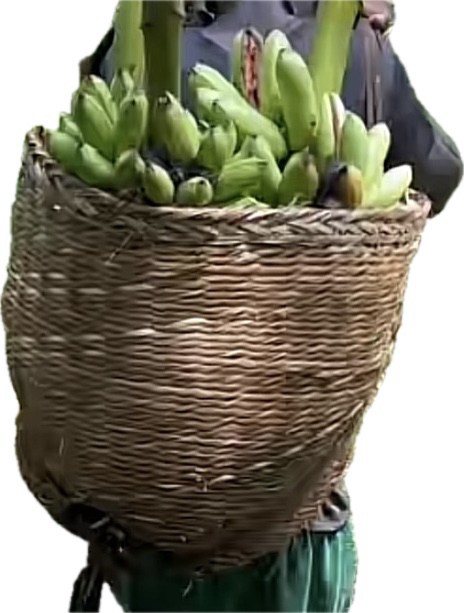
The catanga cargadera ancestral is not simply an object for carrying things; it is a living testimony of the history and culture of indigenous and rural communities. Every thread, color, and design contains stories of generations, teachings, and traditions that have endured through time. Observing it is like peering through a bridge between the past and the present, where identity and memory intertwine.
Development
Since ancient times, the catanga cargadera ancestral has accompanied the daily life of communities. Made from natural fibers such as cotton, wool, or fique, it was known for its strength and versatility. Women carried their children on their backs in it while walking dusty paths or working the land, and farmers used it to transport food, tools, or firewood. More than just a practical object, the catanga was a silent witness to hard days and moments of joy.
Culturally, the catanga cargadera ancestral holds deep meaning. Its bright colors symbolize the fertility of the land, the abundance of the harvest, and the hope of the community. Geometric patterns narrate the connection between humans and nature, the sun, water, and protective spirits. Weaving a catanga was like writing a story in threads: every line and every shade told a unique tale.
Weaving was also a means of transmitting culture. Grandmothers taught their daughters not only the technique of intertwining threads but also the stories, legends, and values that strengthened community identity. In this way, the catanga was not only used to carry objects but also to carry memory, roots, and pride.
Although modern backpacks have arrived with contemporary society, the catanga cargadera ancestral remains alive. Today it can still be seen at fairs, festivals, and in the fields where farmers proudly use it. Every time someone carries it on their shoulders, they revive the memory of their ancestors and demonstrate that traditions are not forgotten—they evolve, but remain alive.
Conclusion
The catanga cargadera ancestral embodies history, culture, and identity. It represents resistance because it has survived the passage of time and the changes of modernity, and it is a symbol of community and living memory. By narrating its story and describing its use, we understand that it is not merely an object for carrying things: it is a thread that weaves the history, strength, and memory of a people who refuse to be forgotten.
INTEGRANTES;
Saidy Nicolle Rivas Mosquera
Jaisy Yoheli Murillo Mosquera
 Agricultura